
I took a trip out around the field in mid October, to check the lie of the land. It was a lovely sunny evening, a gentle breeze with a slight chill and several varieties of birds chirrupping away to each other in the waning light of the day.
Rooks flying overhead in their dozens going home to roost and darkening the sky as they passed overhead. Although the ground is littered with fallen leaves, most trees are still clothed in full leaf mode. The autumnal glow of orange and red just starting to take over from the green. There is confusion being expressed in the growth patterns of the wildflowers. Ragworts are not only in full growth and sporting dozens of yellow flowers, but new, young plants are once again pushing through the soil to produce small rounds of leaves with short stubby stalks and small yellow flowers. Buttercups too, are forming new colonies of young plants, seasonal timing has run amok.
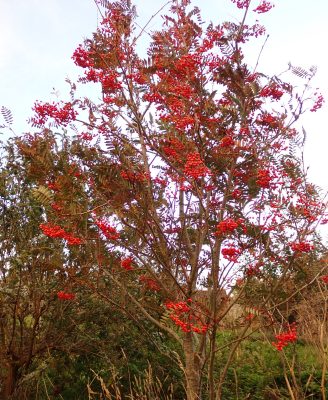
The Dandelion leaves are looking superbly lush and healthy and calling to be picked to join the salad bowl. The red berries on the Rowan trees brighten up the view, and flash in the distant copse as I walk down the hill. And the Nasturtiums are still bright and bonny at the top of the copse, moving slowly but with a sense of purpose, further and further down the hill.
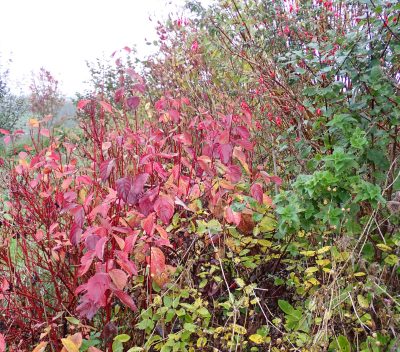
Sawthes of dead thistles turn the lower part of the field into a graveyard, miniature forests of black and brown tattered leaves, with skeletons of the lighter shades of the seed pods, dry and brittle, with the odd addition of some new growth, more confusion. As the grasses die back, new, young oaks are revealed. I have learnt that not all of these survive but it feels a positive sign that more emerge each year than die. The leaves of the Oaks are now taking on a warm shade of Sienna Brown. The Bracken also takes on this colour with hints of orange, eventually collapsing in on itself as it dies. Inspite of the chill, these colours warm the land.
Some serious cawing and screaming from a bird down by the riverbank, no idea what species but obviously absolutely furious. The Redwoods are looking strong and bold and in good leaf and taking on the shape we expect from a Redwood. This is a first, these trees have looked ill for years, with no obvious hope of recovery. We have moved them on more than one occasion, searching for a better location and it looks as if we have struck gold this time. It is a delight to see this happening – at last!
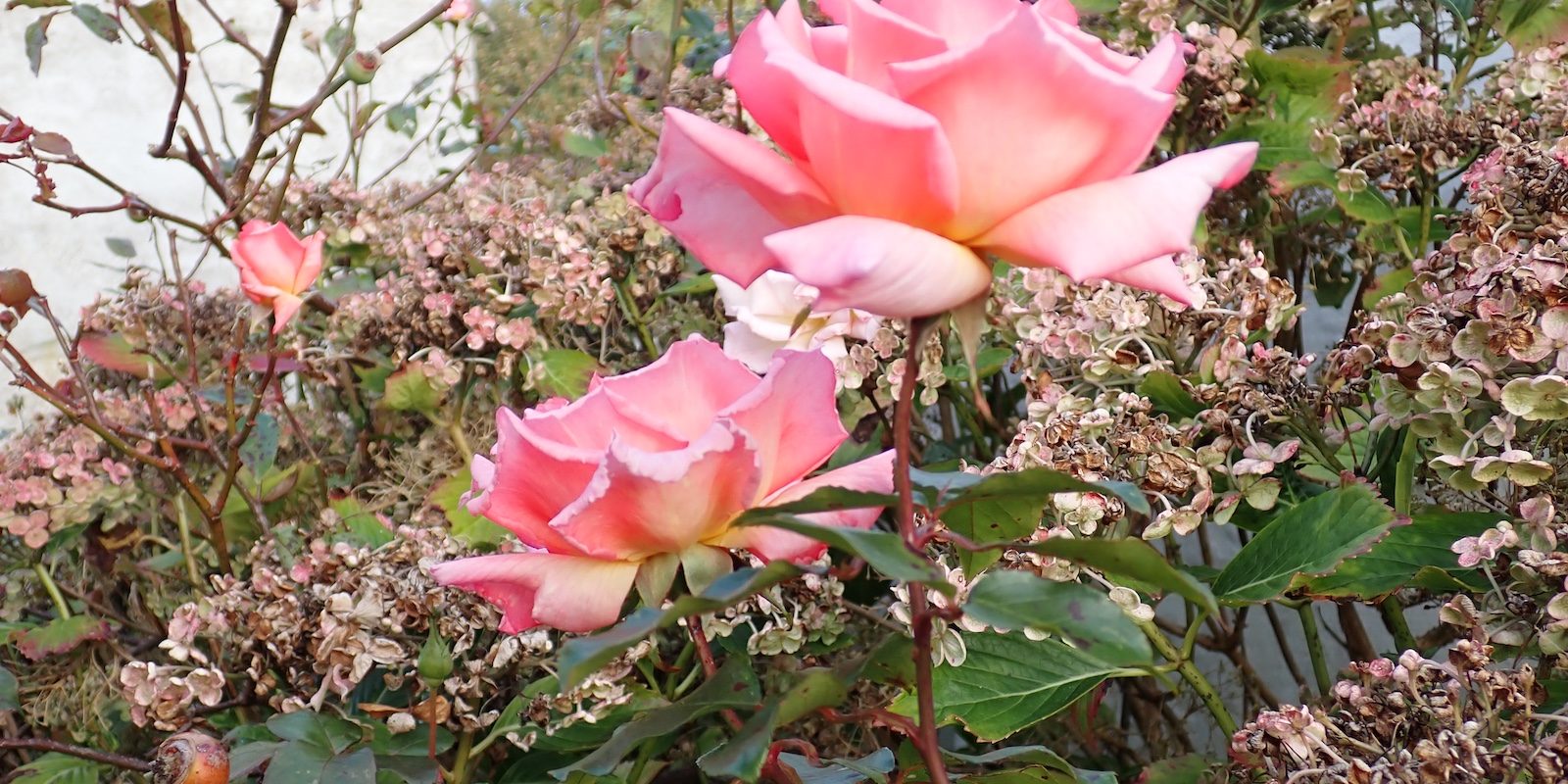
Roses are still blooming at the same time that the hips are appearing on the same bush. Several new colonies of Comfrey are emerging from the undergrowth and sprouting new leaves. Yet more confusion. The newly planted Blueberry bushes have turned the most delicious deep Magenta and the small Olive tree is still thriving. It looks as if I have placed them in the right habitat for their wellbeing.
We are attempting to shape our hedging on the track into our land. It’s a third of a mile long and hasn’t been done for at least 20 years and many of the hedge bushes have turned into fully grown trees. It’s a miniature forest, predominantly Blackthorn and giant Brambles with extremely savage thorns from both of these. The underlying structure is an old Cornish hedge which means there are plenty of stones lurking in amongst the green growth, making it it difficult to use any sawing machinery in it until it has been cleared. The plan is to achieve a shaping on one side of the track and next year to attempt the other side. As I said, it is a plan, and we all know what happens to even the best laid plans. This task may well take us to the end of February 2026, when the hedge cutting season has to come to a stop to protect nesting birds and pollinators. It is slow and laborious work and difficult to avoid the occasional slashing from one type of thorn or another. But also, immensely satisfying to see the old structure of the hedge revealed and new growth allowed to flourish.