Yes, the waning days of July had lulled us into a false sense of security, promising delicious long days outside with heat from dawn to dusk. And then came August and the school holidays and of course the wind, the rain, the mists, the dark clouds, with only an occasional fleeting glimpse of the warm sun above.
Naturally this brought armies of slugs marching in from the fields to munch on, pretty much anything and everything that was on the menu. It’s been a harsh weather year for all the edibles from the fruit trees and bushes to the vegetable patch but the weeds – the weeds have been in heaven and flourished in every one of the beds and hedges.
The latter part of August fulfilled all our dreams and although many weather reports were dismal, here in the Lizard we had plenty of long, and glorious hot days giving much needed growth spurts to all the courgette and squash plants. Most evenings were warm enough to linger outside, where we could watch the swallows feasting on invisible insects and playing diving games in the yard. Other birds were present in different layers of the sky; the gulls gliding silently by on their way home, way above, the elegant and nimble swallows below them and finally the doves, closest to us and so awkward in comparison, crash landing noisily in the lower limbs of the trees. The chattering of the swallows in the barns closed our evenings, their conversations gently fading as they settled down for the night.
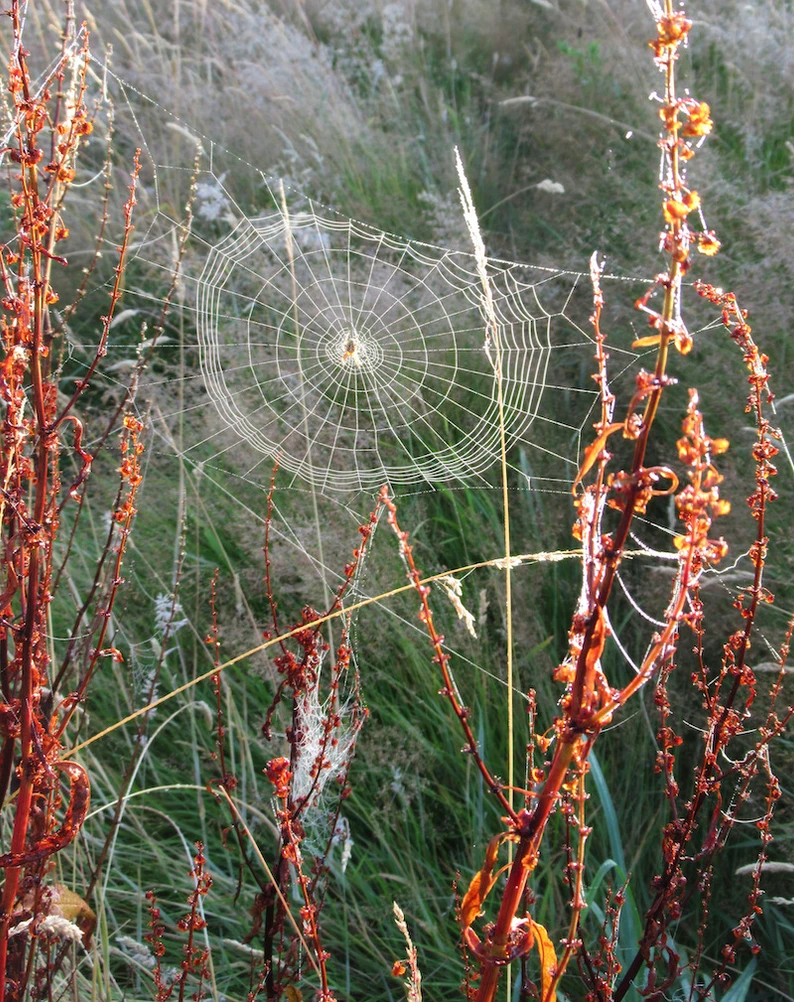
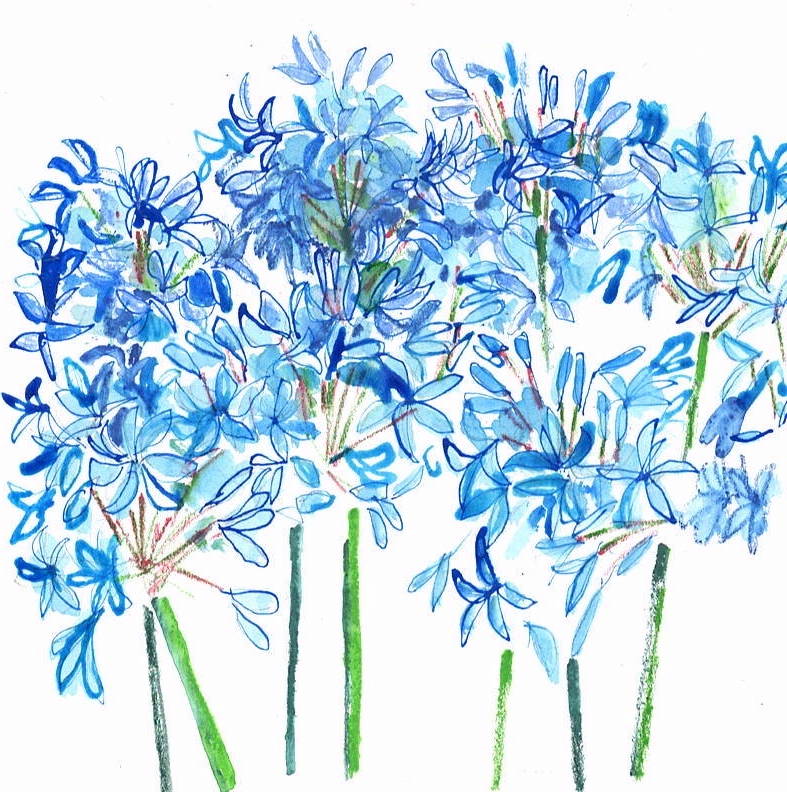
Out in the field, it was the spiders’ moment of glory. Each dawn brought hundreds of newly designed webs, silver in the morning sun with tiny pearls of dew drops catching the light against the golden grasses. To many, the field looks a complete mess of nature but there is such beauty and grace to witness – the field busy with life, death, renewal, hard work and rest. And talking of life, the agapanthus burst forth, lining our hedgerows and many gardens. A bold, generous bright blue plant, the agapanthus, known as the ‘Love flower from Africa’. Cornwall, with its maritime climate and coastal gardens suits this apparently ‘tender’ perennial. I’ve seen it in sand dunes and rock crevices on wild, windy coastal paths and it seems to thrive in all sorts of poor soils in the South West and the Scillies. I love its grand demeanour and colour and I’m happy to see it out in the hedges around the field, but some see it as an unwanted coloniser and grumble about its status as a non, native plant.
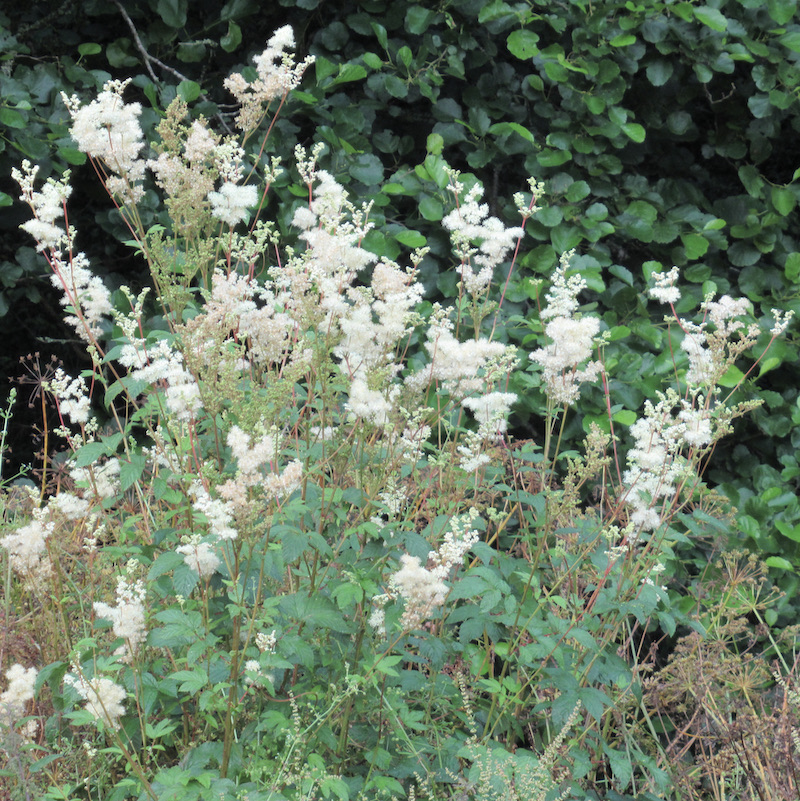
The creeping thistles, so glorious in July have now lost their colourful flowers. Fluffy white tufts of hair have replaced the purple, imprinting a different character on the plant. The aroma of honey still wafts by occasionally, but the meadowsweet has now taken its place as the most potent perfume of August. This tall, pretty flower edges the curves of the riverbank. It grows up to 4 feet in height, with straight red stalks, making it easy to spot well before the flowers have appeared. Its leaves offer us a dark green colour on the top, with a silver white under leaf. Every part of this plant is decorative and as if that wasn’t enough, it also sends out a sweet almond scent, thereby moving it quite close to a marzipan theme, which can never be a bad thing in my book.